
Human-First, Fan-Obsessed
1971 - 2014
A Little Bit of Our History
Our Journey
Decades of Innovation
From humble beginnings to a global movement, here's how we got here.
1971
An Unlikely Start
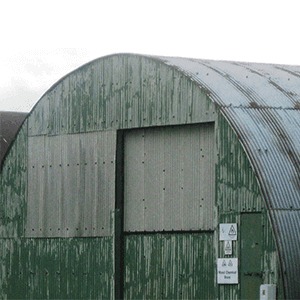
On his return to the UK, Terry started work for Decca at their cassette duplication plant in Bridgnorth, Shropshire, where he designed and serviced the huge cassette tape winding machines which were made on-site. It was during this time that Terry met Decca’s production manager Doug Smith, who would later fulfill the same role as one of Klark Teknik’s early employees. Nissen Huts on the Summerfield Site Phil Clarke had brought a business ides back with him from Australia, where washing cars in the street in towns had been banned, and people were required to go to garages to wash their cars using purpose-built machines that could collect and recycle the used water. Similar legislation was enacted in the UK, and so Phil asked his brother to work on making coin-operated car washing machines, for which there was a ready market.
1973
An Audio Legend is Born
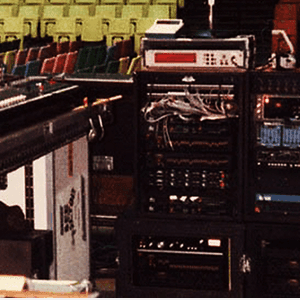
Terry’s car wash machine business took off. However, mirroring his experience in Australia, he continued with his interest in audio electronics as a sideline making bespoke equipment for recording studios. The company started to develop small inductor-based graphic equalisers which were produced in very low quantities and sold mostly to recording studios to compliment the relatively simple mixing console audio processing of the day. The Clarke brothers found that the efficiency that could be had from manufacturing even small batches of 50 or 100 standardised products meant that they could easily be half the price of their bespoke counterparts, and customers were only too willing to pay much less for high quality audio signal processing.
1975
Reel-To-Reel
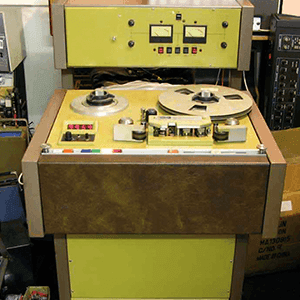
Their next venture led to a long-lasting relationship with the BBC. Terry had used his experiences from working on the Decca cassette tape winding machines, which had very sophisticated motor control, to build a small number of bespoke ¼ inch reel-to-reel tape machines.
1977
Creating The Brand
Soon after the design was revised to reduce these costs by including more PCB mounted components, including precision 1% tolerance resistors, and subcontracting out the metalwork production using a new folded steel design.
1978
A New Home
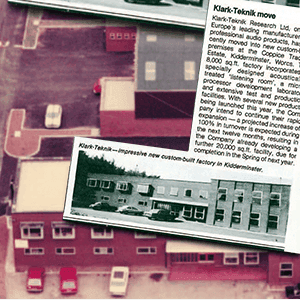
In 1978 the company purchased a 99 year lease on a 1.5 acre plot of land on Walter Nash Road, Kidderminster and the 15-strong company moved to new purpose-built premises on the site in 1980, where it remains to this day. Throughout the following decade, the number of employees would continue to rise, to 45 in 1985 and 144 in 1989.
1980
Klark Teknik Goes Transatlantic
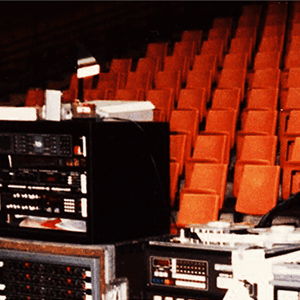
It was around this time that Klark Teknik first came to prominence in the USA, with its graphic equalisers being shown for the first time at the 1976 Billboard Disco show. This lead to an important relationship forming with Jack Kelly, who attended the show and within a few years developed a massive market for KT graphic equalisers in the USA. Later he would open Klark Teknik’s US office in New York in 1980, by which time fully one-third of all KT’s production was shipping to the USA.
1982
The Birth Of Industry Standards
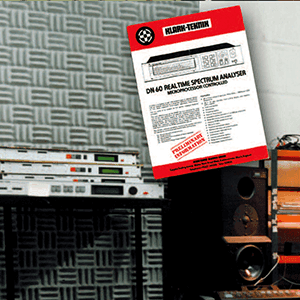
More new products followed, including the DN60 Real Time Analyser in 1980 and the DN300 series of graphic equalisers in 1982, which led to rapid growth and required an extension of the building to cope with the increased production demand. These products became industry standards and many remain in daily use.
1984
Klark Teknik Goes Public
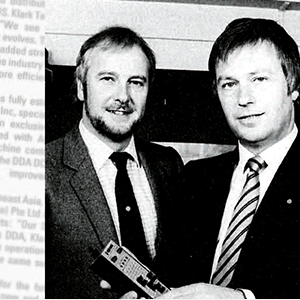
In 1984, Klark Teknik became a public limited company and was floated on the London Stock Exchange. This allowed the Clarke brothers to capitalise on their success to date, one of the benefits of being a publicly traded company is that finance was easy to obtain, and two years later the company was able to acquire Dearden-Davies Associates who were looking for investment for them to grow, perhaps better known as recording studio console brand DDA.
1986
Royal Recognition Klark Acoustic
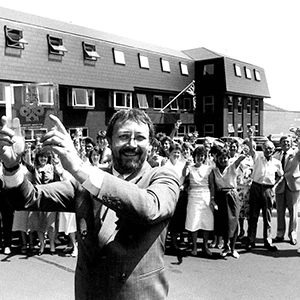
The company’s success led to an invitation to Downing Street. Phil Clarke, his wife Jenni and Doug Smith represented one of five successful Midlands businesses invited to a reception to meet Prime Minister Margaret Thatcher in recognition and celebration of their outstanding enterprise in British industry.
1987
Klark Teknik Acquires Midas
Midas had run into financial challenges with the XL console, which it was unable to bring to market. Terry Clarke knew Jeff Byers and had a high regard for Midas, and whilst the purchase of DDA had cost £2 million, funded by the stock exchange floatation, the Midas business was acquired for considerably less.
1990
The Brothers Move On
Towards the end of the decade, the company was feeling the pressure of being a publicly listed company and having to meet the expectations of the stock market, and at the same time Terry (like all good engineers) knew that what goes up also has to come back down at some point, and had a feeling that the rapidly inflating London stock market bubble was reaching bursting point.
1993
The World’s First Auto-EQ
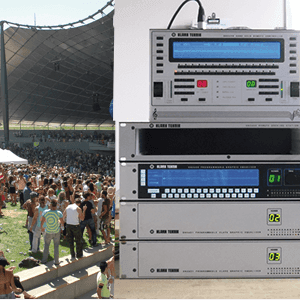
Klark Teknik automated its graphic equalisation with the DN3600 Programmable Graphic Equaliser in 1993, the latter being complemented by the DN3601 Slave Equaliser and the DN3698 Remote Controller with its DN3603 Remote Docking Bay.
1996
The German Connection
In 1996 it was decided to split R&D into two separate sections, one for Klark Teknik and one for Midas (DDA was already autonomous due to its Hounslow location)
2000
Klark Teknik Re-established
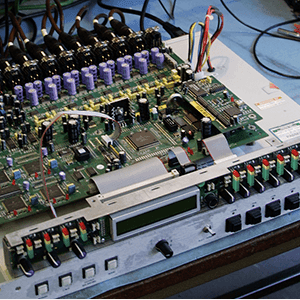
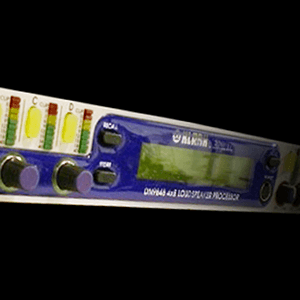
The Klark Teknik R&D suffered from some growing pains and it was not until the end of decade that viable new home-grown designs started to appear. The two key products that helped put the company back on the map were the DN9848 Loudspeaker Processor, notable for being the industry’s first fully featured 4-input, 8-output digital processor in a 1U rack, and the DN1248 Microphone Splitter, which featured Midas’ highly regarded microphone preamplifiers.
2001
Into the New Millennium
With the genesis of a new product portfolio for Klark Teknik, more new products started to appear. Building on the DN9848 hardware platform and incorporating features from both the DN3600 and DN4000 equalisers, plus a novel approach to dynamic equalisation, the DN9340 and DN9344 HELIX Digital Equalisers were launched in 2002.
2003
DN370 - The New DN27
For many years, R&D had pushed to do another analogue graphic equaliser to build on the reputation of the DN360, launched nearly twenty years previously.

2005
On with the Show
A year later, and the DN9848 was incorporated into the HELIX range, and all units received digital audio interfaces and Ethernet control as well as a cosmetic upgrade and an “E” suffix.
2009
The Music Tribe Connection
In December 2009 saw the acquisition of the Midas and Klark Teknik brands by Music Tribe from Bosch.
2011
The PRO Series Expands
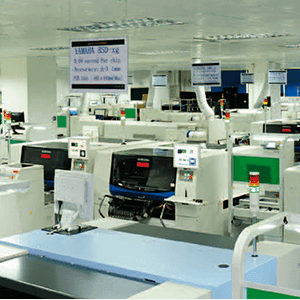
With significant new investment in Midas and Klark Teknik, the Company expanded with more engineers and another floor at the City Park site.
2014
The Future Sound of Midas & Klark Teknik
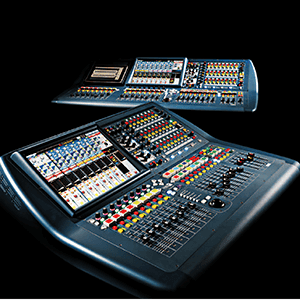
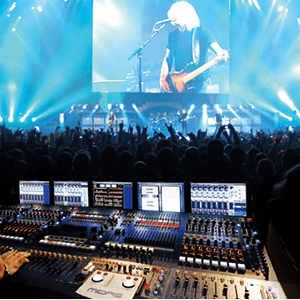
For over 40 years Midas and Klark Teknik have repeatedly shown award-winning innovation and leadership in the world of high end professional audio, producing landmark products that have defined and shaped the live industry.
Industry 4.5 / 5.0
The Creator-to-Fan Revolution
We're pioneering a new era of business where fans, creators, and makers collaborate as equals. This is Industry 5.0—human-centric, sustainable, and built on direct connections.
Empowered Micro-Enterprises
Every Triber acts as an entrepreneur, directly connected to fans and customers. No bureaucracy, no middlemen—just real relationships.
- Direct fan-to-creator connections
- Transparent value sharing
- Ownership & accountability
Living Co-Creation
Products aren't "finished"—they evolve with your feedback. You're not just a customer; you're a collaborator shaping the future.
- Continuous improvement cycles
- Community-driven features
- Rapid iteration & feedback
Human-First Always
Technology serves people, not the other way around. Every decision starts with: "How does this help creators thrive?"
- Sustainable & ethical practices
- Inclusive design principles
- Purpose over profit
A New Way of Working
Breaking down barriers between creators, makers, and fans
The Traditional vs. Creator-to-Fan Model
A new way of working together
Traditional Model
- Top-down decisions
- Siloed departments
- Anonymous customers
- Product-first thinking
- Fixed organizational structure
Creator-to-Fan 4.5
- Fan-driven innovation
- Empowered micro-enterprises
- Direct creator relationships
- Human-first approach
- Adaptive living ecosystem
Be Part of the Revolution
Join 2 million creators worldwide who are shaping the future of music, together.